When sovereign wealth buys the coast: Gulf capital, African tourism and the new geography of strategic ownership.
In February 2024, Abu Dhabi's sovereign fund committed $35 billion to a single stretch of Egyptian coastline — the largest FDI in Egypt's history, at the height of a hard-currency crisis. It was not isolated: Qatar Airways holds 60 percent of Rwanda's new airport and 49 percent of its flag carrier; Qatar's Al Mansour pledged $10 billion to Zanzibar. This is not European margin or Chinese lending. It is Gulf sovereign wealth taking equity in the asset itself — and something travels with the money.
Read the analysis →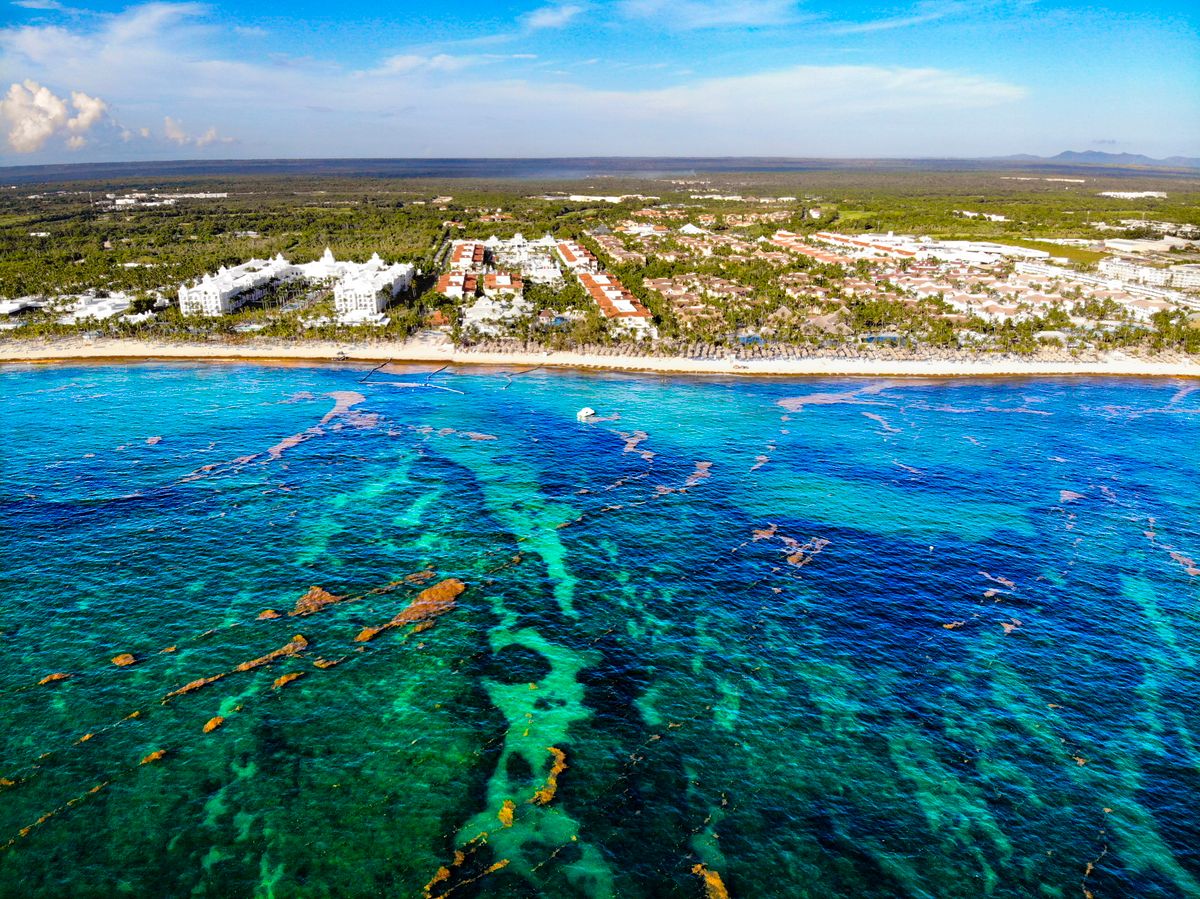
Africa's largest tourism market already exists. Our foreign-exchange metrics can't see it.
Roughly four in five of the world's tourists travel within their own region; Africa's official figure is far lower. But the market exists at scale — Africans crossing their own borders to trade and visit family, paying in local currency through channels the statistics were never built to count.
Four African countries have ratified the free-movement protocol in seven years. The trade deal moves goods faster than the continent moves people.
Africa adopted a free-movement protocol in 2018 and a free-trade area two months later. The trade area is operational; the mobility protocol has four ratifications. Rwanda opened cleanly and scored a perfect 1.000; Kenya announced the same and, executing it as a fee-bearing pre-authorisation, fell seventeen places.
Gabon protected 11 percent of its land and built Africa's last Eden. Tourism is 0.8 percent of its economy.
Gabon protected more of itself than almost any nation on earth and pioneered the debt-for-nature swap. Yet tourism is 0.8 percent of GDP, and the last park-visitor figure it published, for 2015, counted 2,500 people for the whole year. It financed protection through an instrument never designed to finance the way in.
A nation of 525,000 drew with Spain and took Argentina to extra time. Its tourists spend €41 a day.
Cabo Verde's World Cup run delivered a measurable demand shock — US searches up more than 5,000 percent, TUI doubled. The attention now meets a tourism economy built to keep it out: 80 percent of bed-nights on two islands, and €41 of daily visitor spend against €238 in the Canaries.
Algeria and Morocco share a 1,559-kilometre border. It has been closed for thirty-two years.
The longest closed land border in Africa separates two countries at peace. Shut in a single week in August 1994, it has outlasted the king and the four presidents in office when it closed. Economists put the cost of the divided Maghreb at more than 2 percent of annual growth, per country, per year.
Botswana is asking tourism to replace diamonds. Tourism is 5 percent of the economy. Diamonds were a quarter.
In August 2025, Botswana declared a public health emergency because hospitals had run out of medicine. The cause traces to a diamond market collapsed by lab-grown competition. The state is now leaning on a five-percent sector to help replace a quarter of the economy, as the donor money that funded conservation disappears too.
A gorilla permit costs $1,500 in Rwanda and $400 across the border. The gap is the most engineered tourism economy in Africa.
The fifth and final piece in the Sovereign Tourism Architecture series. What separates states that retain tourism value from those that leak it is not their position in the global economy. It is state capacity.
Open skies, higher fares: West Africa freed its airspace and taxed the seats inside it.
West Africa opened its airspace to free routing, saving airlines an estimated $15 million a year. In the same window Ghana added a $100 levy that moved it from ninth to third most expensive in Africa. The airspace is integrating; the fare is fragmenting.
The Gambia grew 46 percent in 2025. The structural cause is the Sahel coups two borders to the east.
Five coups, one confederation, one ECOWAS exit and a set of mutual travel bans closed roughly 2.78 million square kilometres of the Sahel to global leisure tourism. The flow did not disappear. It moved to the coast.
BRICS membership is a diplomatic signal. The tourism receipts depend on what the state does next.
Egypt is capturing the Chinese flow at roughly 300,000 arrivals against 65 percent growth. South Africa is losing share after fifteen years of membership. Ethiopia is the open case. Bloc membership is not the operational variable.
A publication of record for African tourism and global political economy.
Tourism in Africa operates inside a global system shaped by power politics, exchange rates, air connectivity, regulatory regimes and shifting demand. Each week, an event somewhere in the world alters what is possible for an operator, an investor or a ministry on the continent. The Corridor distils those shifts into concise, analytically defensible intelligence. Read by tourism ministries, hotel investors, development banks and the analysts who advise them.
Subscribe — free, every Monday